![]() |
![]() ![]() ![]() |
|
|
|
Home :: Udagamandalam India Tours
|
Udagamandalam India Tours
Tips for Glowing Skin
|
• Fruits and vegetables that are a good source of vitamins and minerals and should be included in your meals as they also provide roughage that helps relieve constipation. Drumsticks, French beans, jackfruits, grapes, figs, peaches, phalsa and guava are some such sources. Lose 10-40 Kgs immediately. For Free Weightloss & Beauty advices Visit womenhealthandbeauty.com |
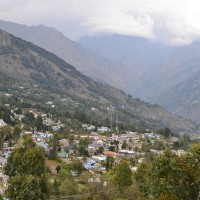
The scenery, as it unfolds during the trip, is breathtaking, awe-inspiring and fantastic. One can notice a marvellous change in vegetation, as one goes from Kallar to Coonoor. At Kallar it is tropical and at Burliar-the next bus-stop as one proceeds from Mettupalayam-it is sub-tropical. Near Coonoor, it is humid with pines, blue gum (Eucalyptus globulus) and cypress trees. As we go from Ooty to Gudalur, the change in vegetation is striking. What a splendid interaction between climate and vegetation ! It is therefore very appropriate that Mount Stuart called the whole road leading to Ooty from Mettupalayam, "One long botanical debauch."
This beautiful botanicalparadise was first brought to the public eye by John Sullivan,
In March 1819, John Sullivan obtained Rs 1,100 (Rupees of those days not to be compared with the present-day rupee) from the Board of Revenue for laying a bridle path up the hill from Sirumugai to Kotagiri and its neighboring village, Dhimatti. The work was executed by McPherson in a period of 2 years starting 1821. This was the only route to the Nilgris from Coimbatore until 1832, when the first Coonoor ghat road was laid, thanks to the then Governor, S.R. Lushington, who got the work executed by Lehardy and Capt. Murray. The present metalled ghat road from Kallar to Coonoor, a distance of 25 km which has 14 hair-pin bends and a gradient of one 18 ft, which facilitated carriage traffic from Madras to Ooty, was mainly constructed by Colonel G.V. Law in 1871. It is gratifying to note that the cascade of the Coonoor river near Wenlock bridge on the Coonoor-Mettupalayam road named after Law, continues to bear the same name.
The Coonoor-Mettupalayam road was extended to Udagamandalam, covering a distance of about 15 km. The Kotagiri-Mettupalayam road (about 34 km long) which was 8 ft wide to begin with, was widened to 17 ft in 1872-75 with a gradient of one in 17 by the Dist. Engineer, Major Morant R.E. and handed over to the District Board in 1881. During the period from 1819 to 1830, John Sullivan's contribution was, apart from laying the route to Ooty, that he built the first house called Stone House in this place. This formed the nucleus of Government offices. Further, at his own expense, he conducted experiments on agricultural and horticultural crops and in animal husbandry to find the most suitable crops and breeds of milch animals for future settlers.Next to the magnificent task of laying the road to Ooty, the British took up, around 1880, the stupendous task of connecting Mettupalayam to Ooty by rail. A Swiss engineer, M. Riggenback and Major Morant of Kotagiri road fame prepared an estimate of 1,32,000 pounds (currency) for laying the rack railway and floated a company called The Rigi Railway & Co Ltd. Since capital was not forthcoming, Mr. Richard Wolley of Coonoor came forward to advance money on the condition that the contract would be entrusted to Mr. Wolley by the Government of Chennai.
Udagamandalam Tours, The agreement between the 2 was signed in 1886, and the company called The Nilgri Railway & Company came into being with a capital of Rs 25 lakh. The work on the line was started in August 1891 by Lord Wenlock, Governor or Madras , but the company was liquidated in 1894. Later, a new company was formed in 1894, and the work was completed in 1899. The line was worked by Madras Railway, to start with. Though the Nilgris formed part of Coimbatore district, it was separated into an independent district in 1868. For a period of 13 years from 1830, it remained part of Malabar district. This was to prevent tobacco smuggling from Coimbatore . From John Sullivan's days to this date, more than 170 years have rolled by. Udagamandalam considered a sanatorium and hill resort by the Europeans, has come to be like any other district. The devastation was so much that a ban on fresh construction was belatedly imposed by the Government.
It is believed that the name Nila, has been in use for over 800 years since, the King of the Hoysalas Vishnu Vardhana, who ruled from 1104 to 1141 AD seized the Nilgiris Plateau. His general Ponisia recorded this fact in 1117 AD with mention of Todas. The name Nilgiri was due to the blue haze, which envelops the range with most distant hills of considerable size.
Ooty Tours, This Nilgiri territory came into possession of the East India Company as part of the ceded lands, held by Tipu Sultan, by the treaty of Srirangapatnam in 1799. Rev. Jacome Forico, a priest was the first European who visited Nilgiris in 1603 and released his notes about the place and people of Nilgiris. In 1812 surveyor William Keys and Macmohan visited the top of the plateau.
In 1818, Wishand Kindersley, Assistant and Second Assistant to Collector of Coimbatore visited this spot and submitted their experience report to the Collector of Coimbatore Mr. John Sullivan. Settlement in Udhagamandalam began in 1822 with the construction of the Stone House by John Sullivan, the then Collector of Coimbatore. The bungalow, which is locally called "Kal Bangla", is one of the landmarks of Udhagamandalam and is now the Chamber of the Principal of the Government Arts College .
Route: Mettupalayam - Coonor - Ooty
Coonoor is situated 6,000 feet above sea level at the southeast corner of the Nilgiri plateau and at the head of the principal pass from the plains. Up this Ghat runs a road 21 miles long and a rack railway 16 ¾ miles from Mettupalaiyam in Coimbatore district. The place was constituted a municipality in 1866. Coonoor remained a terminus for the Nilgiri line for eight years. The extension from Coonoor to Ootacamund was constructed by the Government of India and the line was opened up to Fernhill on September 15, 1908, and up to Ootacamund, a month later. Rack system was discarded for this extension though the ruling gradient is as severe as 1 in 23. The Ooty terminus was named Udagamandalam, the Tamil word for Ootacamund.
Main Feature
Udagamandalam Tours, The main feature of this line is the unique rack system and the equally unique and complicated locomotives. To quote from Sir Guilford L. Molesworth's report of 1886: “The locomotive used for working on the Abt System has two distinct functions: first, that of traction by adhesion as in an ordinary loco and second, that of traction by pinions acting upon the rack bars.
Udagamandalam India Tours, The brakes are four in number-two hand brakes action by friction and two acting by preventing the free escape of air from cylinder and thus using compressed air in retarding the progress of the engine. The former are used for shunting whilst the latter for descending steep gradients. One of the hand brakes acts on the tyres of the wheels in the ordinary manner and the second acts on grooved surfaces of the pinion axle but can be used in those places where the rack is laid. Even after hundred years, the brake system on Nilgiri locomotives is as intricate and cumbersome as it was in 1886.
EndTour/Pearls tour
Contact us for Prior Booking at our 24 Hours desk on the following mobile Nos: +91-99428 99555 , 98424 30308 , 99425 87000 . Email Id : info@pearlsindiatour.com; Fax No: 0422 - 2331605.
| ||||||||